




When to Upgrade to a Bidirectional Battery Inverter in Your Facility?
- 1. What are the primary advantages of integrating a bidirectional battery inverter into my facility's energy system?
- 2. What are the common challenges associated with implementing bidirectional battery inverters in commercial facilities?
- 3. How do bidirectional battery inverters contribute to energy cost savings in a facility?
- 4. What are the key technical considerations when selecting a bidirectional battery inverter for my facility?
- 5. How can I determine the optimal time to upgrade to a bidirectional battery inverter in my facility?
- 6. What are the potential drawbacks of bidirectional battery inverters that facilities should be aware of?
1. What are the primary advantages of integrating a bidirectional battery inverter into my facility's energy system?
Bidirectional battery inverters offer several key benefits:
Enhanced Energy Management: They facilitate two-way energy flow, allowing your facility to store excess energy generated during low-demand periods and supply it back to the grid or internal systems during peak demand, optimizing energy usage and reducing costs.
Improved Grid Stability: By supplying stored energy back to the grid, these inverters contribute to grid stability, especially during peak demand times or outages.
Increased Self-Consumption: Facilities with renewable energy sources can use stored energy to meet their own needs, reducing reliance on external power sources and lowering energy expenses.
Support for Advanced Technologies: They enable integration with emerging technologies like Vehicle-to-Home (V2H) systems and smart home solutions, enhancing overall energy efficiency and flexibility.
2. What are the common challenges associated with implementing bidirectional battery inverters in commercial facilities?
While beneficial, there are challenges to consider:
High Initial Investment: The upfront cost for bidirectional inverters and associated battery systems can be significant, potentially deterring some businesses.
Complex Installation Requirements: Integrating these systems may require specialized knowledge and careful planning to ensure compatibility with existing infrastructure.
Regulatory Compliance: Navigating complex and sometimes inconsistent grid interconnection standards and permitting processes can delay project deployments.
Maintenance Needs: Regular maintenance and monitoring are necessary to ensure optimal performance and longevity, potentially increasing operational complexity and costs.
3. How do bidirectional battery inverters contribute to energy cost savings in a facility?
These inverters can lead to significant cost savings through:
Peak Shaving: By discharging stored energy during peak pricing periods, facilities can reduce their energy bills.
Time-of-Use Optimization: They allow facilities to charge batteries during off-peak times when electricity rates are lower and discharge during peak times, taking advantage of time-of-use rates.
Reduced Demand Charges: By managing energy usage more effectively, facilities can lower demand charges imposed by utilities.
4. What are the key technical considerations when selecting a bidirectional battery inverter for my facility?
When choosing an inverter, consider:
Compatibility: Ensure the inverter is compatible with your facility's existing energy systems and any planned expansions.
Capacity and Scalability: Select an inverter with sufficient capacity to meet current and future energy needs.
Efficiency: Higher efficiency inverters reduce energy losses, leading to better overall performance.
Reliability and Warranty: Opt for inverters from reputable manufacturers that offer robust warranties and have a track record of reliability.
5. How can I determine the optimal time to upgrade to a bidirectional battery inverter in my facility?
Consider upgrading if:
Aging Equipment: Your current inverter is approaching or exceeding its expected lifespan, typically around 10-15 years.
Increased Energy Demands: Your facility's energy consumption has grown, and your existing system can no longer meet these needs efficiently.
Technological Advancements: Newer inverters offer improved efficiency, features, and integration capabilities that your current system lacks.
Regulatory Changes: New regulations or incentives make upgrading more beneficial or necessary.
6. What are the potential drawbacks of bidirectional battery inverters that facilities should be aware of?
Potential drawbacks include:
Higher Upfront Costs: The initial investment for bidirectional inverters and associated battery systems can be significant, potentially deterring some businesses.
Complex Installation Requirements: Integrating these systems may require specialized knowledge and careful planning to ensure compatibility with existing infrastructure.
Maintenance Needs: Regular maintenance and monitoring are necessary to ensure optimal performance and longevity, potentially increasing operational complexity and costs.
In conclusion, upgrading to a bidirectional battery inverter can offer substantial benefits in terms of energy management, cost savings, and system flexibility. However, it's essential to carefully evaluate your facility's specific needs, budget, and long-term goals to determine if this upgrade aligns with your operational objectives. For a personalized consultation and quote, please contact us at info@csinverter.com or visit our website at www.csinverter.com.


Modified Sine Wave Inverters
Can other input voltages be customized?
Yes, the regular is DC12V, and DC24V, etc. can be customized. Please consult customer service for details.
How to connect to the battery?
Use the included battery clips, connect the red clip to the positive pole of the battery and the black clip to the negative pole. Ensure good contact and no short-circuit risk when connecting.
Can 4 USB ports fast charge at the same time?
Yes, 4 USB ports can fast charge mobile phones, tablets and other devices at the same time, meeting the needs of simultaneous charging of multiple devices.
What is the benefit of the UPS function? A2:
It automatically switches to battery power when AC fails.
OEM & ODM Services
What’s the main difference between your OEM and ODM services?
OEM uses your brand on our standard products; ODM creates entirely new products based on your concept or specification.
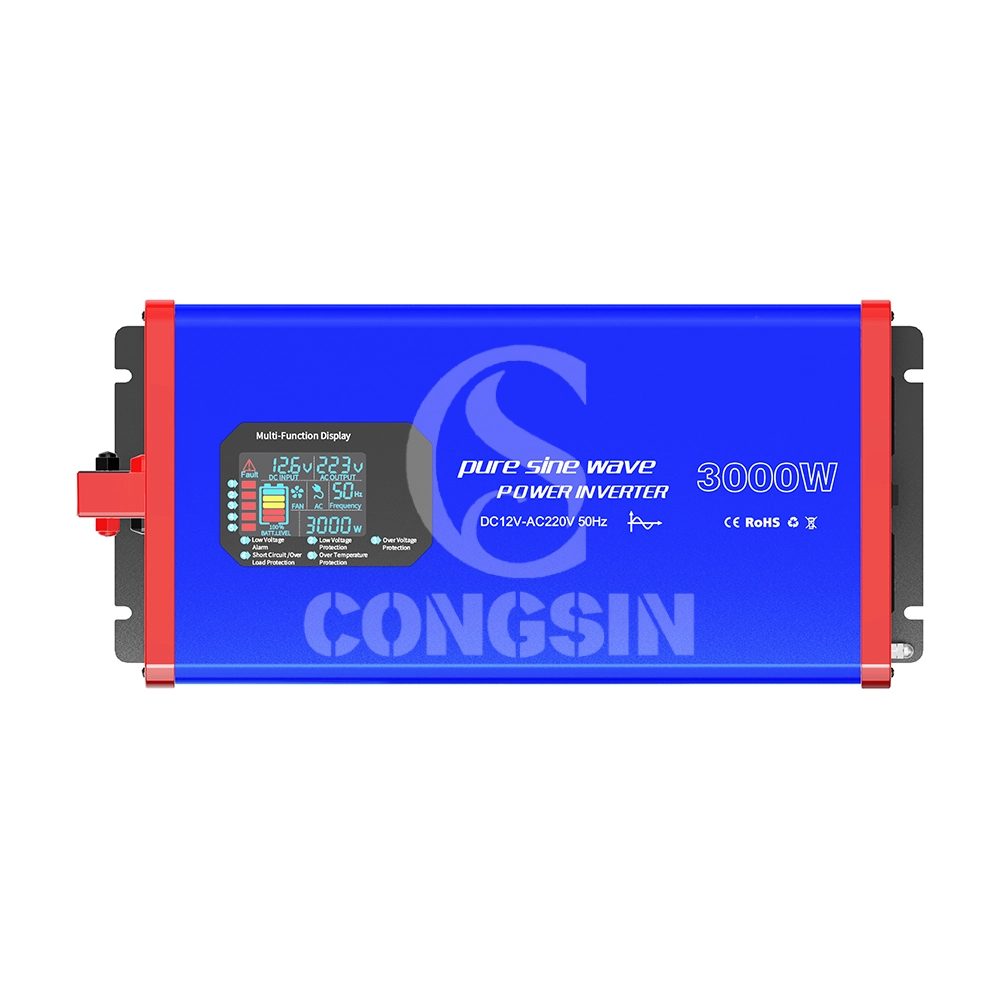
This 3000W full-power pure sine wave inverter (Model: CS3000PSW) adopts pure sine wave output technology (waveform distortion rate <2%), and the output power is highly consistent with mains power quality. It can safely drive high-power precision loads such as air conditioners, refrigerators, medical instruments, and small industrial equipment, avoiding equipment malfunctions or shortened service life caused by unstable waveforms. The device supports DC 12V input (compatible with 10.5V-14.8V wide voltage), continuously outputs 3000W full power, and has a peak power of 6000W, easily coping with the instantaneous startup impact of high-power devices; it is equipped with 4 AC universal sockets (max current 16A) + 2 USB 3.0 fast-charging ports (22.5W per port) to meet the simultaneous power supply needs of multiple devices. Built-in six-fold safety protection (overload, overvoltage, undervoltage, short circuit, overtemperature, reverse connection), combined with dual intelligent silent cooling fans (noise ≤45dB), it achieves the triple advantages of "high power + high safety + low noise," suitable for home emergency, outdoor engineering, vehicle-mounted power supply, small industrial scenarios and other fields.
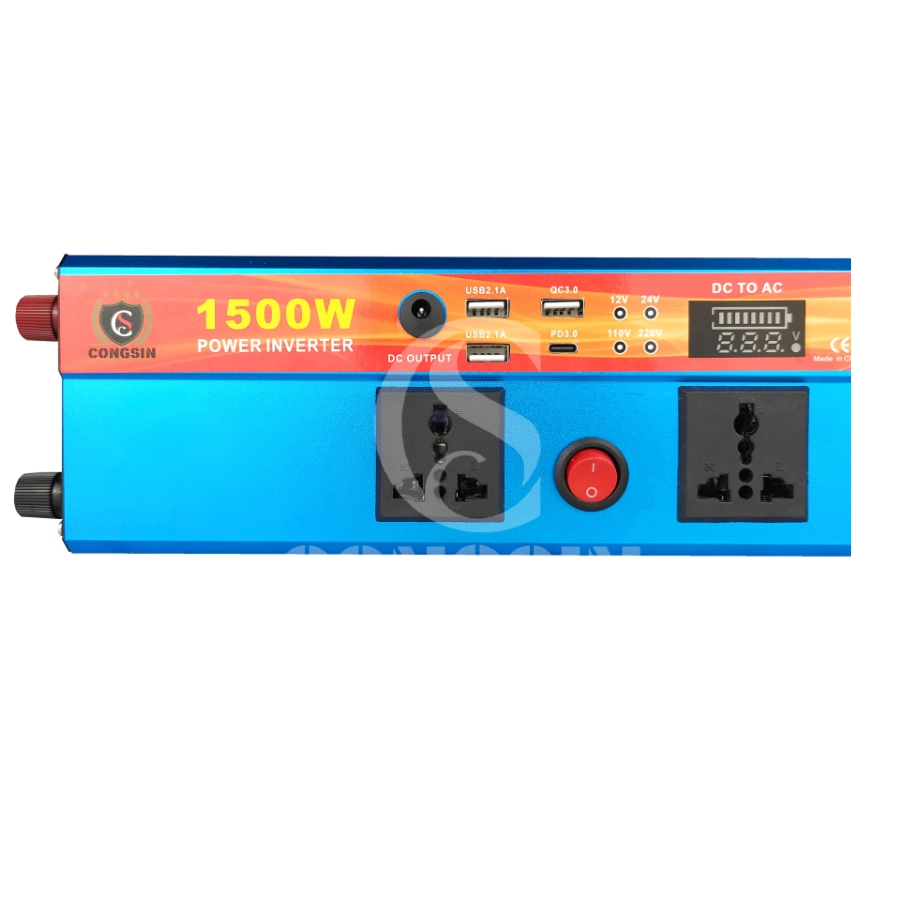
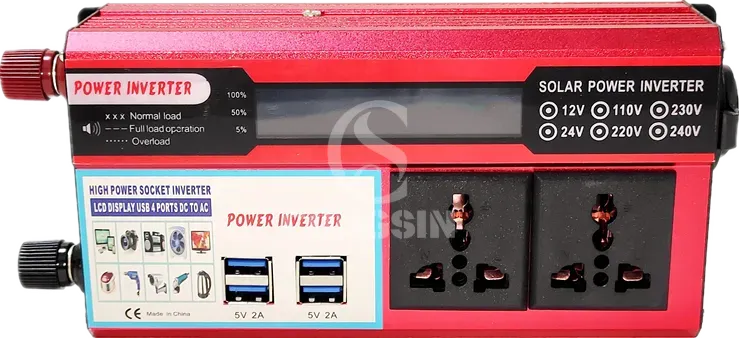
Our CS1000DDBC 1000W modified sine wave inverter is a professional power conversion device that converts DC 12V from batteries into AC 220V electricity. It is designed with user convenience in mind, featuring an LED display for real-time status monitoring, multiple charging ports (3 USB, 1 Type-C, 1 DC 12V) and two universal sockets to power a wide range of devices simultaneously. Its compact size (250×95×55mm) and lightweight design (NW: 0.84kg) make it easy to carry, ideal for outdoor activities, emergency home use, and on-the-go power needs.
Get in Touch with Our Team
You can also communicate with us directly through our online contact form. Please fill in the following information, and our team will contact you as soon as possible after receiving your message.

CONGSIN is a trusted OEM factory for power inverters, solar charge controllers, and DC converters. Reliable solutions for global B2B buyers.
 High Quality
 7/24 Service
 Guaranteed Warranty
© 2025 Congsin. All Rights Reserved.